Sponsored article
Latte art has become an essential skill for baristas worldwide, transforming a simple cup of coffee into a canvas for creativity. With the right approach and tools, such as a high-quality milk pitcher, anyone can learn to craft beautiful latte designs. Whether you’re a beginner eager to explore the basics or an enthusiast looking to refine your technique, mastering latte art not only enhances the visual appeal of your coffee but also elevates the entire drinking experience. Let’s dive into the essentials of this captivating art form.
Choosing the right milk pitcher is a vital step for any barista aspiring to master latte art. The milk pitcher is not just a vessel; it is an essential tool in the barista’s arsenal, playing a crucial role in defining the texture and temperature of steamed milk-key elements for perfecting latte art. When selecting a latte art pitcher, look for features like a comfortable handle, a precise spout for controlled pouring, and a size that matches your typical serving. The material and durability are also important, as high-quality stainless steel pitchers ensure optimal heat retention and consistent milk frothing. Using the right milk pitcher greatly impacts the quality of your designs, allowing intricate patterns that delight customers and enhance the coffee experience. As part of your coffee barista equipment, investing in a premium pitcher can elevate your skills and boost your confidence. For a selection of top-tier barista tools, consider exploring https://cmsale.com/products/brewing/barista-tools for the best options available.
The science of milk frothing is an essential element in the art of crafting the perfect latte, where precision and technique meet creativity. One of the key milk frothing techniques involves achieving the ideal microfoam, characterized by its smooth, velvety texture that seamlessly integrates with espresso to enhance both flavor and presentation. The role of temperature in frothing is crucial; milk should be steamed to a range between 150°F to 155°F (65°C to 68°C) for optimal sweetness and texture. During the steaming process, it’s vital to introduce air into the milk subtly. To master this, follow these steps:
Executing these milk frothing techniques with precision will allow you to create the perfect canvas for stunning latte art.
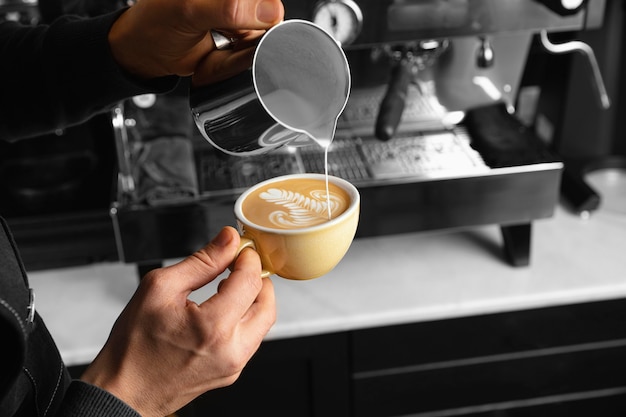
Latte art has become an essential skill for any barista, blending the realms of artistry and coffee creation into a stunning cup of joe. To master the intricate world of latte art techniques, one must delve into a variety of styles such as the free-pour and etching methods. Free-pour involves skillful manipulation of foamed milk through different pouring patterns, allowing an artist to create hearts, rosettas, and even complex tulip designs directly onto the espresso. On the other hand, etching offers a fine-tuned approach by using tools like skewers or coffee stirrers to draw on foam surfaces, offering endless possibilities from simple geometric shapes to intricate images. Practicing latte art is crucial; it refines motor skills and enhances precision, influencing the final design’s symmetry and detail. Allocate dedicated time to experiment with milk texture, pouring speed, and angle of the pitcher. By continually challenging oneself and exploring diverse latte art techniques, one can significantly improve their skills and transform each cup into a canvas of creativity.